It was a solemn and abject Bob Ainsworth, the Secretary of State for Defence, that stood to give a statement on the independent inquiry into the Nimrod crash today after a loud and raucous Prime Minister's Questions.
He gave a full and unreserved apology to the families of the bereaved for an entirely avoidable catastrophe that led to the biggest single loss of life for the Ministry of Defence since the Falklands War.
The deaths of 14 servicemen in the fireball aboard Nimrod XV230 in September 2006 was entirely preventable and was the result of cost-cutting, slack management and an emphasis on business efficiency models rather than military airworthiness within the MoD and the defence industry that maintained and serviced the aircraft.
In short it wasn't the Taliban that killed the servicemen it was "the suits" who inhabit Bae, QinetiQ and the Ministry of Defence.
Liam Fox, the Conservative shadow Defence Secretary caught the tone well: "Cutting corners costs lives. You cannot fight wars on a peacetime budget and there is a moral imperative that those who are willing to risk their lives in the armed service of their country, should know at all times that everything is being done to maximise the chance of success of their mission, and to minimise their risk in carrying it out." Mr Ainsworth could do little but agree.
The actual presentation of the report into the crash of Nimrod XV230 by Charles Haddon-Cave afterwards was the most excoriating and damning condemnation of organisational failure that you will ever hear. Read the entire report here. We'll be providing analysis and reaction in the Herald tomorrow.
His report singles out 10 named individuals for criticism, five from the MoD, three from BAe Systems and two from QinetiQ and if there are no resignations or criminal charges before this affair is over then it will be all the more flabbergasting.
Wednesday, 28 October 2009


Groundbreaking solution from Gers MP
Lots of black humour going around about Rangers but I’m sure Ayrshire Central MP Brian Donohoe, secretary of the Rangers Supporters Club in the Commons, won’t mind me repeating this contribution.
I greeted him last night with commiserations (okay, I was teasing him) on the dire financial situation at Ibrox . Quick as a flash he hit back: "It’s okay, I’ve negotiated a solution. John Reid has offered to groundshare."
Kelly adopts Holyrood system for MPs expenses
Details of the Kelly report on Westminster expenses reforms leaked late last night. The main proposal is an end to mortgage interest payments for second homes in line with the expenses reforms at the Scottish parliament.
Also a ban on employing family members which, I understand, is more draconian than Holyrood where the family relationship just has to be declared in the register (MSPs correct me if I am wrong please?)
The changes are to be phased in over five years to head off a so-called "wives revolt" by 200 MPs who employ their partners or family members.
Fortunately I was still hanging around at a Whitehall reception when the call came through so was able to catch the first edition of the Herald with the story.
I also did a bit for Newsnight Scotland , which was fine except that they spelled my name incorrectly on the tum-tab. But at least I realised how much I need a haircut.
Actually quite a lot of stories moved late last night. John Reid MP, the former Defence secretary was on his way out of the Milbank studios when I was on the way in. He'd just succeeded in persuading Gordon Brown to reverse the £20m cuts in TA training which is good news for the territorials and good news for David Cameron who has been given a gift for Prime Minister's Questions today.
With the prospect of "El Presidente" Blair having dominated the Westminster day it also emerged late that Gordon Brown will be openly canvassing for Mr Blair at this week's EU leaders summit. More on that today, I suspect, and expenses and the report on the Nimrod crash in Afghanistan.
This from this morning's Herald:
The Scottish parliamentary rules on allowances on accommodation for politicians are to be adopted by Westminster, according to the leaked details of the Kelly report on MPs’ expenses reform.
Also a ban on employing family members which, I understand, is more draconian than Holyrood where the family relationship just has to be declared in the register (MSPs correct me if I am wrong please?)
The changes are to be phased in over five years to head off a so-called "wives revolt" by 200 MPs who employ their partners or family members.
Fortunately I was still hanging around at a Whitehall reception when the call came through so was able to catch the first edition of the Herald with the story.
I also did a bit for Newsnight Scotland , which was fine except that they spelled my name incorrectly on the tum-tab. But at least I realised how much I need a haircut.
Actually quite a lot of stories moved late last night. John Reid MP, the former Defence secretary was on his way out of the Milbank studios when I was on the way in. He'd just succeeded in persuading Gordon Brown to reverse the £20m cuts in TA training which is good news for the territorials and good news for David Cameron who has been given a gift for Prime Minister's Questions today.
With the prospect of "El Presidente" Blair having dominated the Westminster day it also emerged late that Gordon Brown will be openly canvassing for Mr Blair at this week's EU leaders summit. More on that today, I suspect, and expenses and the report on the Nimrod crash in Afghanistan.
This from this morning's Herald:
The Scottish parliamentary rules on allowances on accommodation for politicians are to be adopted by Westminster, according to the leaked details of the Kelly report on MPs’ expenses reform.
Like MSPs who have to stay in Edinburgh overnight politicians at Westminster could in future be banned from claiming for the mortgage interest payments for London homes, according to recommendations leaked last night.
Sir Christopher Kelly, the chairman of the Committee on Standards in Public Life, will propose that MPs should in future have to rent if they require a second home. The move is aimed at stemming public anger that MPs might make a profit during their parliamentary career from rising house prices in the capital at the expense of the tax payer.
According to the report, Sir Christopher will also suggest a reduction in the number of MPs who are eligible to claim the second homes allowance.
Currently, only central London MPs are excluded from claiming for a second home, but under the proposals any MP with a constituency in "reasonable commuting distance" of Westminster will have to meet their own accommodation costs.
The recommendations on accommodation will affect all Scottish MPs who spend up to four nights a week at Westminster before travelling back to their constituencies at the weekend.
Following the retrospective judgements of Sir Thomas Legg on MPs expenses going back five years some politicians feared the Kelly report might take a draconian approach and recommend repayment of any capital gains already made on flats bought under the existing system of allowances. If that does not form part of the recommendations it is expected that most MPs will accept the changes as part of the reform package.Last week Gordon Brown said that whatever the recommendations the reforms should not act as a disincentive to people considering entering parliament.
As has previously been reported, the Kelly report will also recommend a ban on MPs employing members of their families paid for out of public funds. As with accommodation allowances the change is expected to be phased in over five years in an attempt to head of a "wives revolt" by the 200 MPs who currently employ family members as parliamentary staff.
Thursday, 22 October 2009
The chamber twitters into a postal strike
Reprint of yesterday's PMQs sketch almost as it appeared in the Herald ( because don't you love it when the subs cut out your pay off line).
Dr John Pugh, the analogue Lib Dem MP for Southport, has a motion down condemning the growing tendency of hon. members to text, e mail and twitter their way through parliamentary debates. According to his motion "greater interest is shown in e-mails and messages than in the contribution of parliamentary colleagues", although he admits the practice is "at times quite understandable".
Quite a few MPs are getting famous for twittering from the chamber, which for the uninitiated is a 140 character message posted to followers on an internet website. I know, some can’t see the point, but with the price of postage these days...
Jo Swinson, the Dunbartonshire East MP does it - constantly. She’s one of these people who a survey discovered wouldn’t notice a red-nosed, unicycling clown going down the street in front of them because they are too busy tweeting into their phones that they are walking down a street. Tom Harris, the Scottish blogfather, does it but with limited 3G coverage in his Glasgow North-East encampment we are spared his opinions on 1970s tv programmes for another week. Pete Wishart, SNP MP does it, or did , until Labour caught him out slagging off the whole of Prime Minister’s Questions. Not a tweet out of him since, and he was not visible at PMQs yesterday.
That said from a perch high in the press gallery I could hardly see the green benches for all the other journalists twittering into their mobile phones. Alistair Carmichael, Orkney and Shetland, was fiddling with a blackberry, but he could have been playing snake, as twittering is below him.
If all these MPs had glanced up from their phones they would have seen David Cameron and Gordon Brown going ding dong on another form of communication - the postal service. Cameron had accused Gordon Brown of lacking the "courage and leadership" to intervene in the postal dispute. In fact he accused him of "appalling weakness" in not bringing the bill to privatise the Royal Mail to the Commons, but if you were distracted by an incoming text alert you would have missed that.
"This has nothing to do with the dispute," complained the Prime Minister. "Let us urge the negotiation and mediation that is necessary avoid an unproductive strike," said Mr Brown, trying to sound authoritative and reassuring in the face of a winter of discontent.
"What the Prime Minister has just said is complete nonsense," said Cameron. He was talking about the Royal Mail bill which Mr Brown could not get past his backbenchers, not the Royal Mail strike.
Mr Brown, tried posting another letter through the slot and chastised the Tory leader for bringing the Royal Mail strike into "the political arena". There are few things in this world more political than a strike, Mr Cameron reminding him that union militancy was on the increase. At that the Prime Minister ran out of patience, slamming his papers down on the dispatch box (cries of ohh) as he urged Mr Cameron to reflect on whether his remarks were making it any easier to solve the dispute .
"I would have thought they would have agreed with me that this is a counterproductive strike could only be resolved by proper negotiation and arbitration," said Mr Brown sounding sensible.
But, as usual, it was Mr Cameron who came away smelling as fresh as Interflora roses delivered to the doorstep. In the end it’s all about delivery. Mr Cameron speaks the language of the smartphone, and Mr Brown has the communicative power of a second class stamp on a postal strike Thursday
Dr John Pugh, the analogue Lib Dem MP for Southport, has a motion down condemning the growing tendency of hon. members to text, e mail and twitter their way through parliamentary debates. According to his motion "greater interest is shown in e-mails and messages than in the contribution of parliamentary colleagues", although he admits the practice is "at times quite understandable".
Quite a few MPs are getting famous for twittering from the chamber, which for the uninitiated is a 140 character message posted to followers on an internet website. I know, some can’t see the point, but with the price of postage these days...
Jo Swinson, the Dunbartonshire East MP does it - constantly. She’s one of these people who a survey discovered wouldn’t notice a red-nosed, unicycling clown going down the street in front of them because they are too busy tweeting into their phones that they are walking down a street. Tom Harris, the Scottish blogfather, does it but with limited 3G coverage in his Glasgow North-East encampment we are spared his opinions on 1970s tv programmes for another week. Pete Wishart, SNP MP does it, or did , until Labour caught him out slagging off the whole of Prime Minister’s Questions. Not a tweet out of him since, and he was not visible at PMQs yesterday.
That said from a perch high in the press gallery I could hardly see the green benches for all the other journalists twittering into their mobile phones. Alistair Carmichael, Orkney and Shetland, was fiddling with a blackberry, but he could have been playing snake, as twittering is below him.
If all these MPs had glanced up from their phones they would have seen David Cameron and Gordon Brown going ding dong on another form of communication - the postal service. Cameron had accused Gordon Brown of lacking the "courage and leadership" to intervene in the postal dispute. In fact he accused him of "appalling weakness" in not bringing the bill to privatise the Royal Mail to the Commons, but if you were distracted by an incoming text alert you would have missed that.
"This has nothing to do with the dispute," complained the Prime Minister. "Let us urge the negotiation and mediation that is necessary avoid an unproductive strike," said Mr Brown, trying to sound authoritative and reassuring in the face of a winter of discontent.
"What the Prime Minister has just said is complete nonsense," said Cameron. He was talking about the Royal Mail bill which Mr Brown could not get past his backbenchers, not the Royal Mail strike.
Mr Brown, tried posting another letter through the slot and chastised the Tory leader for bringing the Royal Mail strike into "the political arena". There are few things in this world more political than a strike, Mr Cameron reminding him that union militancy was on the increase. At that the Prime Minister ran out of patience, slamming his papers down on the dispatch box (cries of ohh) as he urged Mr Cameron to reflect on whether his remarks were making it any easier to solve the dispute .
"I would have thought they would have agreed with me that this is a counterproductive strike could only be resolved by proper negotiation and arbitration," said Mr Brown sounding sensible.
But, as usual, it was Mr Cameron who came away smelling as fresh as Interflora roses delivered to the doorstep. In the end it’s all about delivery. Mr Cameron speaks the language of the smartphone, and Mr Brown has the communicative power of a second class stamp on a postal strike Thursday
Tuesday, 20 October 2009
Ludovic Kennedy, the Rawalpindi and the Lewis connection
Tributes have been flowing all day to Ludovic Kennedy, the broadcaster and campaigner, who died late on Sunday evening.
None was more fulsome or eloquent than Dr Finlay MacLeod's tribute on Radio nan Gaidheal this morning. It should be available soon on listen again, as they say on the Beeb, a seo.
Doc Finlay quite rightly made mention that one of the driving forces in Kennedy's lifelong fight against injustices was the treatment of his father, Edward Kennedy, by the Royal Navy, and went on, in the limited time allowed, to mention the poignant thread between that event and the Isle of Lewis.
The Daily Telegraph obituary takes up the background story: "Kennedy senior he had been a naval captain during the First World War, and in 1921 had narrowly averted mutiny by Royal Fleet Reservists by negotiating with the men directly. As a result he was court-martialled and forced out of the navy.
"The naval authorities seemed to acknowledge the injustice when in 1938, aged 60, he was recalled for active service and given command of the Rawalpindi, a P&O liner inadequately converted into a battlecruiser. A few months into the war in 1939, the Rawalpindi was sunk by the German battlecruiser Scharnhorst.
"Ludovic Kennedy heard about the sinking on the BBC nine o'clock news bulletin and immediately rang the War Office to find out about his father. "The Captain? No I'm afraid he's gone," he was told.
"Bitter grief mixed with an unutterable sense of pride proved an emotionally shattering combination which only became more intense when, some years later, he learned the truth about his father's court martial. He would later admit that his concern about miscarriages of justice probably stemmed from his feelings at the injustice done to his father."
There was only ever going to be one result when on October 23, 1939, in mountainous seas in the Iceland-Faroes gap, the Rawalpindi engaged the most powerful naval ship in the world, the German battle-cruiser Scharnhorst.
Outgunned Captain Edward Kennedy, perhaps driven by the sting of his court martial refused the German order to heave to, and in the barrage that followed carried on firing guns with the ship ablaze from stem to stern.
Kennedy died in the action along with 237 of his men. Twelve of the gunners on the Rawalpindi were naval reservists from Lewis and eight of them were killed. The four survivors became prisoners of war.
Among the island dead was Murdo MacKenzie, who grew up on the croft next to ours in Swordale. My aunts, who were schoolchildren at the time, still paint a vivid picture of the day the local postmaster took the first wartime telegram to arrive our village informing our neighbours and relatives Donald and Lily MacKenzie that their son had been lost.
Donald John MacLeod, a maritime historian who documents these island losses, recollects how the shockwaves from that buff-coloured envelope spread. "I was a boy in Uig at the time and I remember the anxiety all over the island," he told me, when I wrote about the event for a piece on Armstice Day.
"At first it was thought the 12 Lewis lads had been killed. Then there was information that all the survivors on the German ship, Deutschland, were Scots - this lifted morale but no more was heard and gloom descended again."
And that was an enduring gloom. Within the month the postmaster was back at Donald MacKenzie's blackhouse door in Swordale. A second telegram: his second son, John, another naval reservist, had also been lost at sea. So the bell kept tolling, through all the villages, throughout the war.
No one on Lewis, as far as I know, took issue with Edward Kennedy's bravery or leadeship that day but the result was that his name, and that of the Rawalpindi, became woven into the wartime history of the island.
None was more fulsome or eloquent than Dr Finlay MacLeod's tribute on Radio nan Gaidheal this morning. It should be available soon on listen again, as they say on the Beeb, a seo.
Doc Finlay quite rightly made mention that one of the driving forces in Kennedy's lifelong fight against injustices was the treatment of his father, Edward Kennedy, by the Royal Navy, and went on, in the limited time allowed, to mention the poignant thread between that event and the Isle of Lewis.
The Daily Telegraph obituary takes up the background story: "Kennedy senior he had been a naval captain during the First World War, and in 1921 had narrowly averted mutiny by Royal Fleet Reservists by negotiating with the men directly. As a result he was court-martialled and forced out of the navy.
"The naval authorities seemed to acknowledge the injustice when in 1938, aged 60, he was recalled for active service and given command of the Rawalpindi, a P&O liner inadequately converted into a battlecruiser. A few months into the war in 1939, the Rawalpindi was sunk by the German battlecruiser Scharnhorst.
"Ludovic Kennedy heard about the sinking on the BBC nine o'clock news bulletin and immediately rang the War Office to find out about his father. "The Captain? No I'm afraid he's gone," he was told.
"Bitter grief mixed with an unutterable sense of pride proved an emotionally shattering combination which only became more intense when, some years later, he learned the truth about his father's court martial. He would later admit that his concern about miscarriages of justice probably stemmed from his feelings at the injustice done to his father."
There was only ever going to be one result when on October 23, 1939, in mountainous seas in the Iceland-Faroes gap, the Rawalpindi engaged the most powerful naval ship in the world, the German battle-cruiser Scharnhorst.
Outgunned Captain Edward Kennedy, perhaps driven by the sting of his court martial refused the German order to heave to, and in the barrage that followed carried on firing guns with the ship ablaze from stem to stern.
Kennedy died in the action along with 237 of his men. Twelve of the gunners on the Rawalpindi were naval reservists from Lewis and eight of them were killed. The four survivors became prisoners of war.
Among the island dead was Murdo MacKenzie, who grew up on the croft next to ours in Swordale. My aunts, who were schoolchildren at the time, still paint a vivid picture of the day the local postmaster took the first wartime telegram to arrive our village informing our neighbours and relatives Donald and Lily MacKenzie that their son had been lost.
Donald John MacLeod, a maritime historian who documents these island losses, recollects how the shockwaves from that buff-coloured envelope spread. "I was a boy in Uig at the time and I remember the anxiety all over the island," he told me, when I wrote about the event for a piece on Armstice Day.
"At first it was thought the 12 Lewis lads had been killed. Then there was information that all the survivors on the German ship, Deutschland, were Scots - this lifted morale but no more was heard and gloom descended again."
And that was an enduring gloom. Within the month the postmaster was back at Donald MacKenzie's blackhouse door in Swordale. A second telegram: his second son, John, another naval reservist, had also been lost at sea. So the bell kept tolling, through all the villages, throughout the war.
No one on Lewis, as far as I know, took issue with Edward Kennedy's bravery or leadeship that day but the result was that his name, and that of the Rawalpindi, became woven into the wartime history of the island.
And where would I rather be today...

Emmanuel Coupe's picture from the top of the Quiraing, looking south to The Old Man of Storr, has been chosen from thousands of entries as Take A View's 2009 Landscape Photography of the Year Award.
The best images from the competition will be displayed at a free exhibition from the 5th December at London's National Theatre.
Friday, 16 October 2009
Scottish MPs respond to Legg demands
My colleagues and I spent a large part of yesterday contacting all the Scottish MPs to determine what Sir Thomas Legg has requested off them and what their response will be. For the most part they are paying up on minor things like duplicate claims and small furniture bills.
Read Mike Settle's Herald piece here and hopefully view the table of Scottish MPs here or click onto the page below and say abracadabra.
The Herald
16 Oct 2009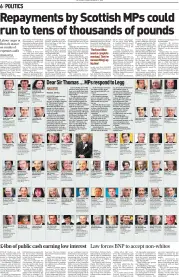

Read Mike Settle's Herald piece here and hopefully view the table of Scottish MPs here or click onto the page below and say abracadabra.
The Herald
16 Oct 2009
Subscribe to:
Posts (Atom)


 Posts
Posts


